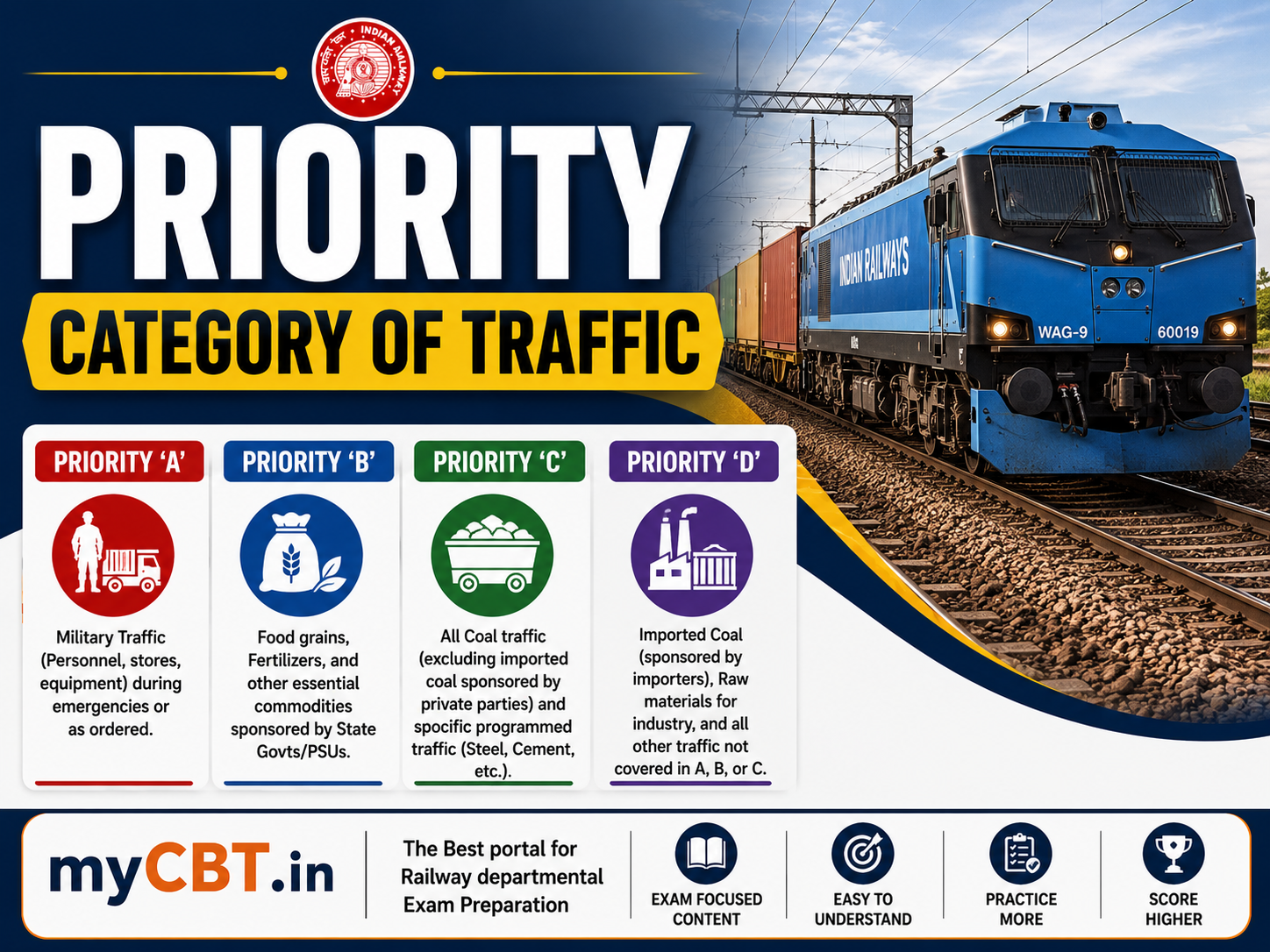
which is issued annually by the Railway Board under Section 71 of the Railways Act, 1989—imported coal traffic sponsored by consignors or importers falls under Priority 'D'.
📋 PTO Priority Hierarchy
To help you with the AOM exam, here is the full breakdown of the priority classes:
🔍 Key Nuances for the Exam
Coal Differentiation:
Coal for Power Houses/Steel Plants/Public Sectors falls under Priority 'C'.
Imported Coal sponsored by private importers falls under Priority 'D'.
Emergency Power: The Railway Board has the power to upgrade any 'D' priority traffic to a higher class if it's in the public interest.
Validity: The PTO is usually valid for one year (e.g., PTO No. 98).
Inter-priority: Within the same priority class, traffic is generally handled on a "First-Come, First-Served" basis based on the date of registration of the demand (Wagon Demand Registration Fee - WDRF).
🎯 High-Yield Operational Point
As an AOM, you must ensure that Quota Traffic or Programmed Traffic (like Priority 'C') is cleared before picking up Indents from Priority 'D'. If you load 'D' priority while 'C' priority indents are pending without specific permission, it is considered a violation of the PTO.