☢️ What is CBRN?
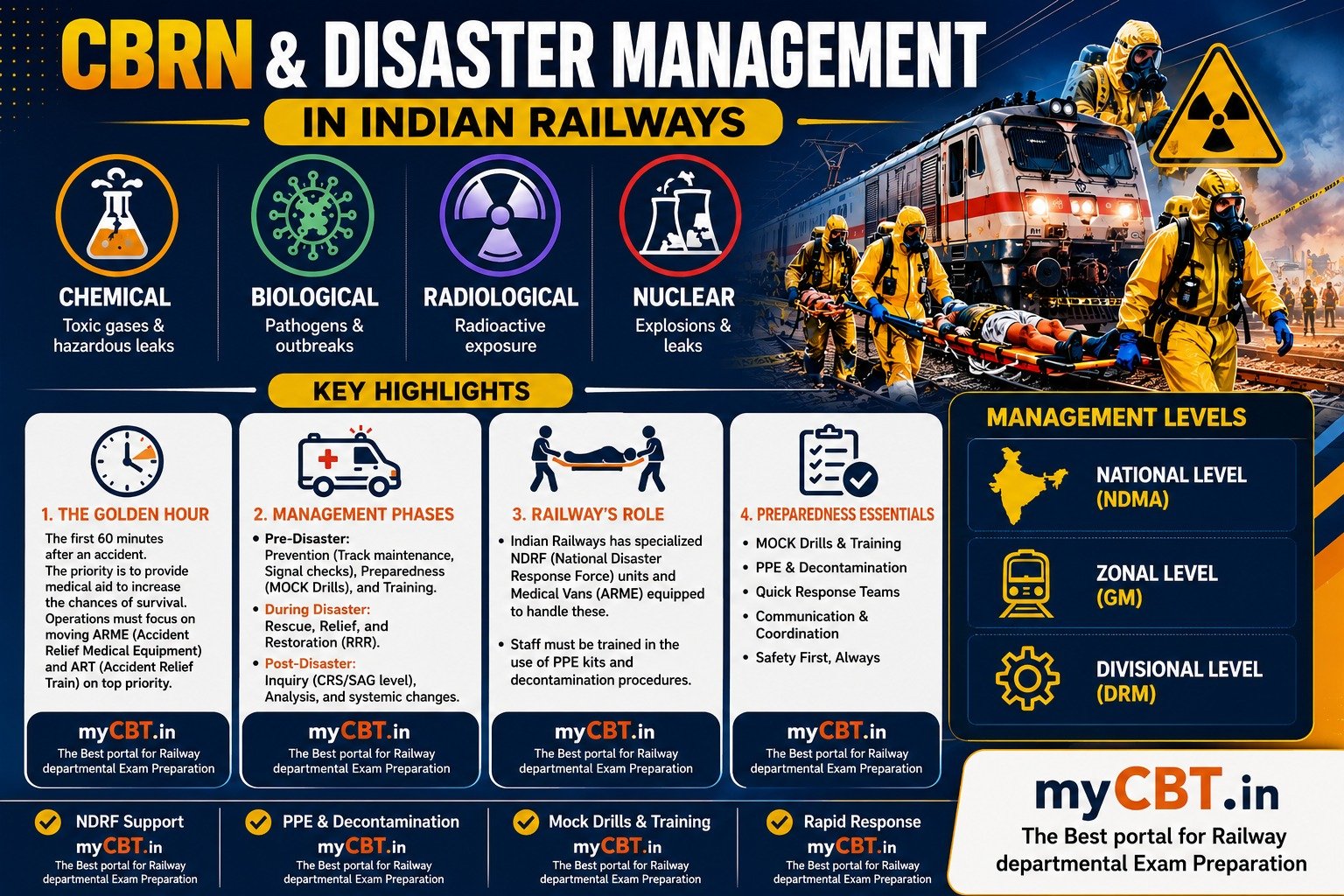
In Disaster Management, CBRN stands for Chemical, Biological, Radiological, and Nuclear disasters. These are "man-made" disasters involving hazardous materials.
Chemical: Leakage of toxic gases (e.g., Bhopal Gas Tragedy) or hazardous chemicals during transport.
Biological: Outbreaks or intentional release of pathogens (viruses/bacteria).
Radiological: Exposure to radioactive materials (e.g., from medical or industrial waste).
Nuclear: A nuclear explosion or significant leak from a power plant.
Railway's Role: Indian Railways has specialized NDRF (National Disaster Response Force) units and Medical Vans (ARME) equipped to handle these. Staff must be trained in the use of PPE kits and decontamination procedures.
🏗️ Disaster Management in Indian Railways
The Railway DM plan is structured into three levels: National (NDMA), Zonal (GM), and Divisional (DRM).
1. The Golden Hour
The first 60 minutes after an accident. The priority is to provide medical aid to increase the chances of survival. Operations must focus on moving ARME (Accident Relief Medical Equipment) and ART (Accident Relief Train) on top priority.
2. Management Phases
Pre-Disaster: Prevention (Track maintenance, Signal checks), Preparedness (MOCK Drills), and Training.
During Disaster: Rescue, Relief, and Restoration (RRR).
Post-Disaster: Inquiry (CRS/SAG level), Analysis, and systemic changes.