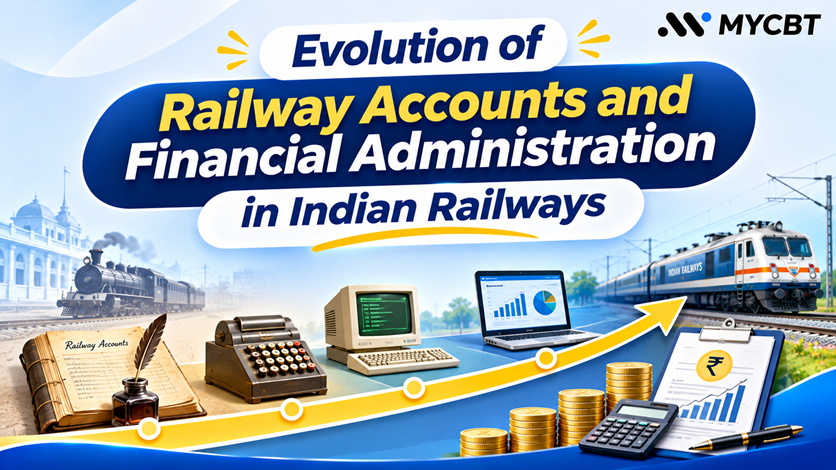
The history of Railway Accounts and Financial Administration in Indian Railways has developed gradually alongside the organizational and administrative development of the Indian Railways.
At the beginning of the 20th century, the Railways in India had spread across different parts of the country, with more than 40,000 route kilometres. However, its regulation and control were still vested in the Railway Branch of the Public Works Department (PWD), Government of India.
Similarly, the accounting and auditing functions relating to the Railway Branch were under the Accountant General of the Public Works Department.
The development of the Railway Accounts Department and the financial administration of Indian Railways took place through several important stages.
1. Recommendation for Constitution of Railway Board – 1903
In 1903, Sir Thomas Robertson, Special Commissioner for Indian Railways, recommended the constitution of a Railway Board.
The proposed Railway Board was to consist of:
A Chairman
Two other Members
This recommendation was an important step towards establishing a separate organizational structure for railway administration.
2. Railway Board Assumed Office – March 1905
The Railway Board assumed office in March 1905.
The Railway Board was directly responsible to the Government of India in the Department of Commerce and Industry.
Its staff included, among others, an Examiner of Accounts.
In subsequent years, the designation of Examiner of Accounts was changed to Railway Accounts Officer.
Exam Point
Railway Board → Assumed office in March 1905
Examiner of Accounts → Subsequently redesignated as Railway Accounts Officer
3. Railway Department Reconstituted as a Distinct Entity – 1908
In 1908, on the recommendations of the Railway Finance Committee, the Railway Department was reconstituted.
The Railway Department, consisting of the Railway Board and its staff, was made a distinct entity independent of the Department of Commerce and Industry.
This was an important step towards giving the Railways a more independent administrative and financial identity.
4. Chairman, Railway Board Designation Changed
The designation of the Chairman, Railway Board was changed to the President of the Railway Board.
The President of the Railway Board was given direct access to the Viceroy and Governor General.
This change strengthened the administrative position of the Railway Board.
5. Creation of Accountant General, Railways
At the same time, the post of Accountant General, Public Works Department was abolished.
A separate post of Accountant General, Railways was created.
The Accountant General, Railways was placed under the administrative control of the Auditor General.
Important Point
Accountant General, PWD → Abolished
Accountant General, Railways → Created
Administrative control → Auditor General
6. Appointment of Financial Commissioner for Railways – April 1923
One of the most important milestones in the history of financial administration in Indian Railways was the appointment of the Financial Commissioner for Railways in April 1923.
The appointment received the sanction of the Secretary of State for India.
It formed part of the reorganization scheme of the Railway Board recommended by the Acworth Committee (1921).
Acworth Committee – 1921
The Acworth Committee played an important role in recommending the reorganization of the Railway Board and the financial administration of Railways.
Exam Point
Financial Commissioner for Railways → April 1923
Committee associated → Acworth Committee, 1921
7. Objectives of Appointment of Financial Commissioner
The declared objectives of appointing the Financial Commissioner for Railways were mainly two:
First Objective
To secure economy in the expenditure of public money.
Second Objective
To establish coordination between:
The financial policy of Indian Railways, and
The general financial policy of the Government of India.
Easy Revision
Financial Commissioner = Economy + Coordination
8. Separation Convention – 1924
The appointment of the Financial Commissioner was followed by the Separation Convention of 1924.
Under the Separation Convention, Railway finances were separated from the General Finances of the Government of India.
This was a major milestone in the financial history of Indian Railways.
Exam Point
Separation Convention → 1924
Purpose → Separation of Railway finances from General Government finances
9. Final Separation of Railway Finances – 1929
The final separation took place in 1929.
The year 1929 also marked the beginning of the Indian Railway Account Service (IRAS).
Thus, 1929 is an important year to remember in connection with:
Final separation of Railway finances
Beginning of IRAS
10. Controller of Railway Accounts
With the development of the separate Railway financial system, the Accountant General, who was under the administrative control of the Auditor General, was replaced by the Controller of Railway Accounts.
The Controller of Railway Accounts was made responsible to the Financial Commissioner, Railways.
At the same time:
Director of Railway Audit continued to remain under the Auditor General.
This stage also marked the beginning of IRAS as distinct from IA&AS.
Important Exam Comparison
Controller of Railway Accounts → Responsible to Financial Commissioner, Railways
Director of Railway Audit → Under Auditor General
11. Railway Accounts Department under General Manager – 1937
A further important change took place following the recommendations of the Indian Railway Enquiry Committee, 1937, commonly known as the Wedgwood Committee.
On the pattern of the British Railway system, the Railway Accounts Department was placed under the administrative control of the General Manager instead of the Financial Commissioner, Railways.
This represented an important change in the administrative relationship of the Railway Accounts Department.
Exam Point
1937 → Indian Railway Enquiry Committee
Popular name → Wedgwood Committee
Administrative control of Railway Accounts → General Manager
12. Chief Accounts Officer Designated as FA & CAO
The Chief Accounts Officer of the Railways was designated as the:
Financial Advisor and Chief Accounts Officer (FA & CAO)
The FA & CAO was expected to function in close proximity to the General Manager.
However, in case of disagreements, the FA & CAO would have access to the Financial Commissioner for Railways.
This arrangement was intended to maintain financial prudence.
Important Point
FA & CAO = Financial Advisor and Chief Accounts Officer
The position combined the financial advisory and accounts functions while maintaining access to the Financial Commissioner in cases of disagreement.
13. Establishment of Finance Branch at Different Levels
A well-established and distinct Finance Branch was set up at different levels of the Railway organization.
The Finance Branch extended from:
Railway Board → Divisional Level
This development led to substantially improved working of the Railways.
The establishment of a distinct finance structure helped integrate financial considerations into railway administration at different organizational levels.
Present Financial Set-Up of Indian Railways
The Government of India has delegated railway-related powers to the Ministry of Railways, including Railway Finance.
The Railway Ministry, through the Railway Board, is managed through the railway organization and has a separate finance service cadre consisting of officials of the Indian Railway Accounts Service (IRAS).
Indian Railways has its own independent and integrated financial set-up.
The two important features mentioned in the source are:
1. Financial Sanction Powers
The Railway Ministry enjoys full powers of financial sanction to expenditure.
2. Railway Accounting
The accounting processes of the Railways are maintained by Railway Accounts officials.
These accounts are audited by the Comptroller and Auditor General of India (CAG).
Railway Budget and Union General Budget
Since 2016, the Railway Budget has been merged with the Union General Budget.
Even after the merger, Indian Railways continues to prepare and submit its expenditure estimates in the form of Demands for Grants.
According to the provided material, Railway expenditure estimates are sent as Demands for Grants numbered 1 to 16 to the Finance Ministry, where they are consolidated and presented in the form of Demand for Grant No. 85 for the vote of Lok—
Note: The supplied source ends at this point, so the final wording after “vote of Lok-” has not been completed here.
Important Timeline of Railway Accounts Development
| Year | Important Development |
|---|---|
| 1903 | Sir Thomas Robertson recommended constitution of Railway Board |
| March 1905 | Railway Board assumed office |
| 1905 | Examiner of Accounts was part of Railway Board staff |
| 1908 | Railway Department reconstituted as a distinct entity |
| 1908 | Chairman, Railway Board designation changed to President of Railway Board |
| 1908 | Separate Accountant General, Railways created |
| 1921 | Acworth Committee recommended Railway Board reorganization |
| April 1923 | Financial Commissioner for Railways appointed |
| 1924 | Separation Convention; Railway finances separated from General Finances |
| 1929 | Final separation of Railway finances; beginning of IRAS |
| 1937 | Wedgwood Committee / Indian Railway Enquiry Committee |
| 1937 | Railway Accounts Department placed under General Manager |
| 2016 | Railway Budget merged with Union General Budget |
Important Authorities and Their Roles
Railway Board
The Railway Board was recommended in 1903 and assumed office in March 1905.
Accountant General, Railways
A separate post was created after abolition of the Accountant General, PWD arrangement and was under the administrative control of the Auditor General.
Financial Commissioner for Railways
The Financial Commissioner was appointed in April 1923 following the reorganization recommendations associated with the Acworth Committee.
The objectives included economy in public expenditure and coordination between Railway financial policy and the general financial policy of the Government of India.
Controller of Railway Accounts
The Controller of Railway Accounts replaced the Accountant General arrangement and was responsible to the Financial Commissioner, Railways.
Director of Railway Audit
The Director of Railway Audit remained under the Auditor General.
FA & CAO
The Chief Accounts Officer was designated as Financial Advisor and Chief Accounts Officer and was expected to function in proximity to the General Manager while retaining access to the Financial Commissioner in cases of disagreement.
IRAS
The Indian Railway Account Service (IRAS) emerged as a distinct railway financial service, with the source identifying 1929 as the beginning of IRAS.
Important One-Liners for Railway Departmental Exams
At the beginning of the 20th century, Indian Railways had more than 40,000 route kilometres.
Railway regulation and control were initially vested in the Railway Branch of the Public Works Department.
Accounting and auditing functions of the Railway Branch were initially under the Accountant General of the PWD.
Sir Thomas Robertson recommended the constitution of the Railway Board in 1903.
The proposed Railway Board consisted of a Chairman and two Members.
The Railway Board assumed office in March 1905.
The Railway Board was initially responsible to the Department of Commerce and Industry.
The staff of the Railway Board included an Examiner of Accounts.
Examiner of Accounts was subsequently redesignated as Railway Accounts Officer.
In 1908, the Railway Department was reconstituted as a distinct entity independent of the Department of Commerce and Industry.
The Chairman of the Railway Board was redesignated as the President of the Railway Board.
The President of the Railway Board had direct access to the Viceroy and Governor General.
A separate Accountant General, Railways was created.
The Accountant General, Railways was under the administrative control of the Auditor General.
The Financial Commissioner for Railways was appointed in April 1923.
The appointment of Financial Commissioner was associated with the reorganization recommended by the Acworth Committee, 1921.
The objectives of the Financial Commissioner included economy in public expenditure and coordination of Railway and Government financial policies.
Separation Convention took place in 1924.
Railway finances were separated from the General Finances of the Government of India under the Separation Convention.
The final separation took place in 1929.
1929 also marked the beginning of IRAS according to the provided material.
Accountant General was replaced by the Controller of Railway Accounts.
Controller of Railway Accounts was responsible to the Financial Commissioner, Railways.
Director of Railway Audit remained under the Auditor General.
The Indian Railway Enquiry Committee, 1937 is commonly known as the Wedgwood Committee.
Following the 1937 recommendations, Railway Accounts Department was placed under the administrative control of the General Manager.
Chief Accounts Officer was designated as Financial Advisor and Chief Accounts Officer (FA & CAO).
FA & CAO was expected to function in proximity to the General Manager.
FA & CAO could access the Financial Commissioner for Railways in cases of disagreement.
A distinct Finance Branch was established from the Railway Board to divisional level.
The Ministry of Railways has powers relating to Railway Finance.
Indian Railways has an independent and integrated financial set-up.
Railway accounting processes are maintained by Railway Accounts officials.
Railway accounts are audited by the Comptroller and Auditor General of India (CAG).
The Railway Budget was merged with the Union General Budget in 2016.
Railway expenditure estimates continue to be presented through Demands for Grants.
Quick Memory Chain
For quick revision, remember the major chronological sequence:
1903 → Robertson Recommendation
↓
1905 → Railway Board Assumed Office
↓
1908 → Railway Department Distinct Entity
↓
1921 → Acworth Committee
↓
1923 → Financial Commissioner for Railways
↓
1924 → Separation Convention
↓
1929 → Final Separation + Beginning of IRAS
↓
1937 → Wedgwood Committee
↓
FA & CAO + Finance Branch Development
↓
2016 → Railway Budget Merged with Union General Budget
The development of the Railway Accounts Department and financial administration of Indian Railways took place through a series of important organizational and financial reforms.
The key milestones for examination purposes are the 1903 Robertson recommendation, 1905 Railway Board, 1908 reorganization, 1921 Acworth Committee, 1923 Financial Commissioner, 1924 Separation Convention, 1929 final separation and beginning of IRAS, 1937 Wedgwood Committee, development of FA & CAO and Finance Branch, and the 2016 merger of the Railway Budget with the Union General Budget.
For departmental and LDCE examinations, special attention should be given to years, committees, designations, administrative control and the sequence of financial reforms.
myCBT.in – Best Departmental Exam Preparation Portal
Prepare smarter with topic-wise Railway departmental exam notes, revision material and important one-liners.
Available on Play Store also.